
Gathering all wisdom,
All wisdom,
All that we can, we
Open our heart and mind
to the ineffable,
with the attitude
that everything is a teaching,
everything that we encounter,
All will bring benefit,
if only, if only
We can stabilize
our turbulent view,
if only, if only
We can hold that
which is most precious,
bringing benefit to All,
if only, if only
We can rest,
remaining completely at ease
in the eternal now,
if only, if only
We can realize that all this,
all that is here for us now,
So that, so that,
gathering all these teachings,
these precious flowers of wisdom,
all these perspectives, all this wisdom,
We can begin to make some sense,
Some sense in a way
In a way that is
beyond concept,
beyond belief,
beyond our limited point of view,
Our limited point of view…
Knowing this,
Knowing that
we don’t yet know,
Knowing this illusion
has gotten us, confused us,
Knowing this quite well,
gathering all these perspectives,
investigating
that, seeing all
these relative points of view,
We can relax
in our real nature,
Finding,
Discovering at last,
Glimpses, dramatic vistas
Beyond what we thought possible,
as we walk through that door
Into Ultimate Knowledge,
We can Awaken!
A poem by Robert Aho © 2026
Rimé is a nonsectarian approach to Spiritual Practice. It does not discriminate, placing one spiritual tradition above another. It is an open-hearted approach to awakening that can bring great benefit, if you are open to the notion that differing perspectives give us additional depth and understanding that cannot be provided by one religion or one sectarian view. Rimé requires great spiritual capacity, as well as the ability to simply remain at ease. This means that we must remain appreciative of all traditions, with the ability to learn deeply in a genuine manner.
Originally, Rimé was meant to alleviate rivalry and competition between various Buddhist sects. It promoted an appreciation of differences and an open-minded approach to Spiritual Practice. Personally, I see Rimé as a way to include and appreciate non-Buddhist philosophies and spiritual traditions, without becoming rigid or creating obstacles that could cause harm to self and others. Developing this attitude of inclusiveness offers the Spiritual Practitioner the opportunity to truly examine all that appears. If we treat everything as a teaching, we can cut through the nonsense. This gives us the ground and the opportunity to awaken much more quickly. It is also necessary if we are Seekers, not yet on the Spiritual Path.
In my life, I have explored and questioned everything that came my way, starting at a very early age. When I was still a Christian, I began to explore the teachings of various denominations and institutions. This gave me perspective, as well as a deep appreciation for the teachings of Yeshua. My contention with my pastor, who was accusing me of having no faith when I was only twelve, was that truth could not be harmed by a question. This outraged him and it gave me all the more confidence to question and investigate even more. I wanted truth, not just someone else’s word for anything.
What was obvious was that I had a natural Rimé attitude about spiritual matters. Through my spiritual endeavors, I was still seeking truth, and I had no use for filtered dogma or spiritual manipulation. I took it to heart that looking within I would find the truth. This was a teaching of Yeshua that simply made sense to me. I didn’t know at the time that it was also a teaching of Buddha Shakyamuni and all the great masters who followed him.
I left Christianity and became a very adamant Agnostic, delving into science, dabbling with this or that, exploring religions and philosophies, various ways of life, including Shamanism. I was a Seeker. I gathered as much as I could, and I sifted through that. If something was proven untrue, I discarded it at once. If I encountered truths, I looked deeper, trying to develop clarity through different perspectives. My attitude was that I should always adopt the best knowledge. Many people in my life said I was always right. I objected to that assessment, because I didn’t cling to any knowledge in particular and I didn’t want to think that I was always right about things. What I wanted was something that could withstand scrutiny and investigation, something, some truth, that could withstand a question without becoming damaged in some way.
As various ideas and notions about reality were examined closely, everything began to fall apart. I found myself in a bit of a crisis. That’s when I discovered Buddhism. What occurred to me almost immediately was that Buddhism was everything I had wanted Christianity to be. It embraced science and deep inquisitiveness. It encourages lots of questions.
With Buddhism, I began to gather teachings and teachers of many sectarian viewpoints and philosophies, comparing each with intense scrutiny. As my relationship with a certain sectarian viewpoint came into crisis, I then found Dzogchen, which is beyond the constraints of Buddhism.
My rather intense death experience went beyond what can be explained logically. That became possible because I had come to Dzogchen through an attitude of Rimé. I had gathered many viewpoints.
Blessings of Source,
Rigdzin Robert Aho
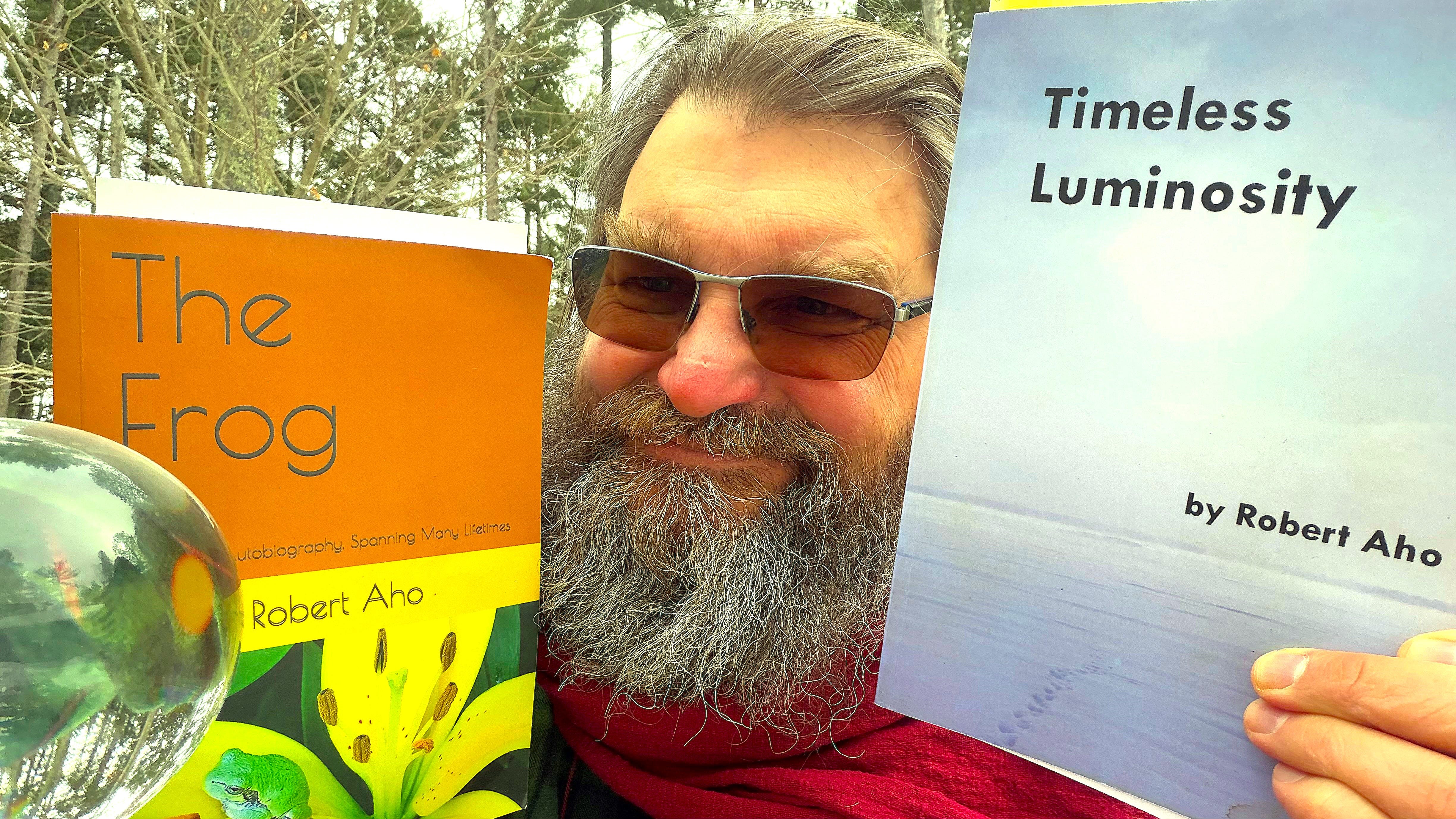
Robert Aho is the author of Timeless Luminosity and The Frog: A Spiritual Autobiography, Spanning Many Lifetimes. Both books, written after his death experience, give advanced spiritual advice regarding the complete Spiritual Path, inspiration for living each day and words of encouragement, with the intention of helping people to stay committed to their Spiritual Path, as well as preparing for death. This ultimately leads to discovering your own power within, which leads to Awakening. Both books are available on Amazon, Zenith Bookstore, as well as various other sources.
heheh thank you robert